How Do You Know When You Need a New Roof?
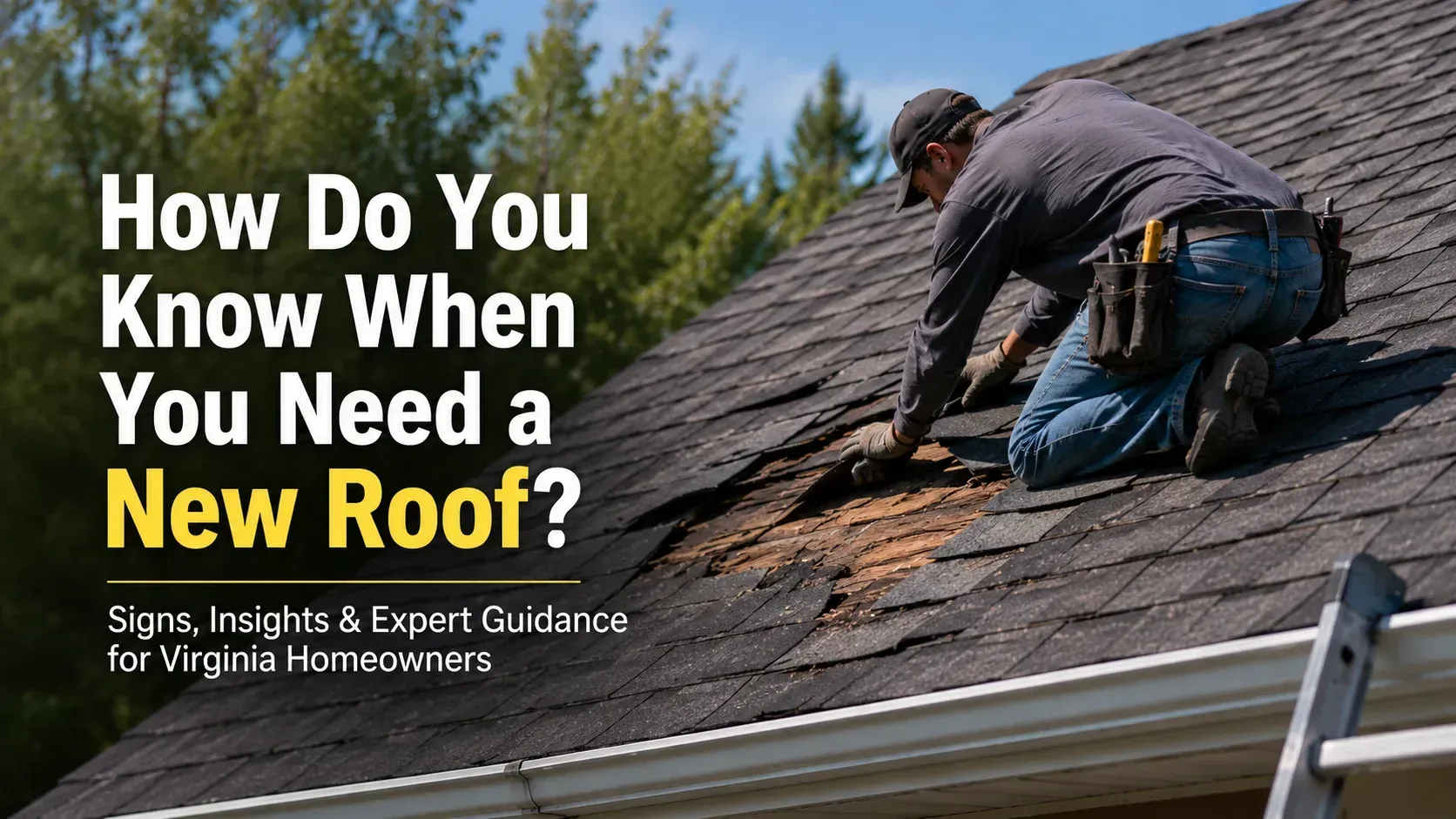
How Do You Know When You Need a New Roof?
Table of Contents
- Introduction
- How Old Is Your Roof?
- Visible Shingle Damage
- Granule Loss and Bare Spots
- Roof Leaks and Water Stains
- Sagging or Uneven Roof Lines
- Signs in the Attic
- Moss, Algae, and Excess Debris
- Daylight Through the Roof Boards
- Frequent or Recurring Repairs
- When a Repair May Be Enough
- Conclusion
- Summary
- Frequently Asked Questions
Key Takeaways
- Common signs you need a new roof include curling or missing shingles, granule loss, persistent leaks, and visible sagging.
- Roof age is a major factor - most asphalt shingle roofs in Virginia last between 20 and 25 years, depending on material and maintenance.
- Interior signs, like water stains on ceilings or daylight visible through the attic, can indicate roof failure even when the exterior looks intact.
- Not every issue requires full replacement; some problems can be addressed with a targeted roof repair.
- A professional inspection is the most reliable way to confirm whether a roof needs repair or replacement.
Introduction
Knowing when you need a new roof generally comes down to a combination of factors: the roof's age, visible damage, and signs of water intrusion inside the home. For Virginia homeowners, recognizing these signs early matters because roofing issues that go unaddressed can lead to more significant and costly damage over time.
This guide outlines the most common indicators that a roof may be nearing the end of its useful life, helping homeowners understand what to look for and when professional evaluation may be warranted.
How Old Is Your Roof?
Roof age is one of the clearest starting points when evaluating whether replacement may be necessary. Most asphalt shingle roofs in Virginia are designed to last between 20 and 25 years, though this can vary based on material quality, installation, and maintenance history.
If a roof is approaching or has passed this age range, it's reasonable to have it evaluated, even if no obvious damage is visible. Materials naturally weaken over time, even without a single major storm or incident.
Homeowners who are unsure of their roof's exact age can often find this information in home inspection reports, permit records, or by asking the home's previous owner.
Visible Shingle Damage
Shingles in poor condition are one of the most visible signs of an aging or failing roof.
Curling or Buckling Shingles
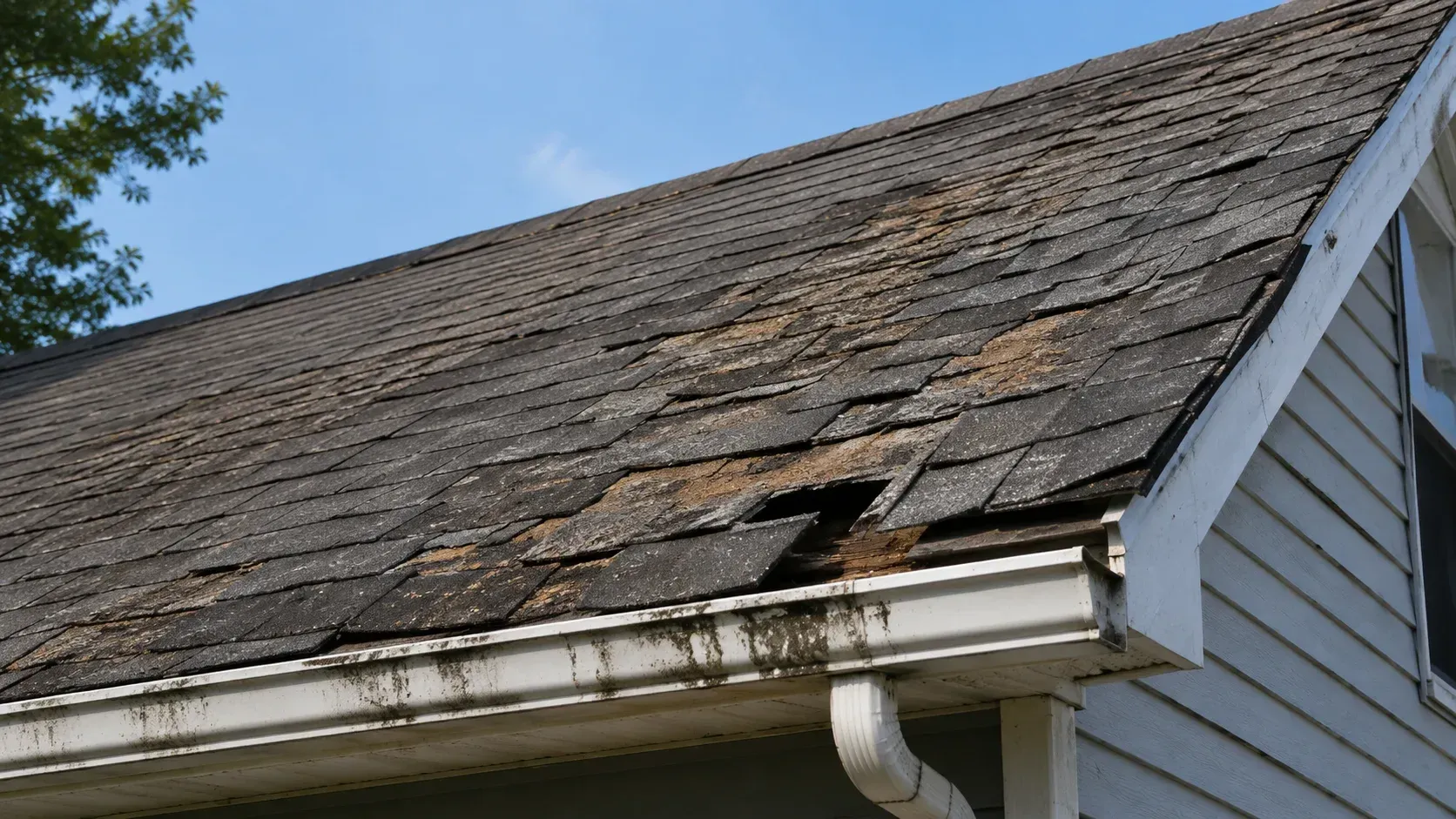
Shingles that curl at the edges or buckle in the middle often indicate that the material has lost flexibility and is no longer providing adequate protection.
Cracked or Broken Shingles
Cracking can occur from age, temperature fluctuations, or impact damage. A few cracked shingles may be repairable, but widespread cracking across the roof often points to broader material failure.
Missing Shingles
Gaps where shingles have blown off or come loose expose the underlying roof deck to moisture and should be addressed promptly, regardless of the roof's overall age.
Granule Loss and Bare Spots
Asphalt shingles are coated with granules that protect against UV exposure and weather. Over time, these granules wear away.
A small amount of granule loss is normal, especially on a newer roof. However, large bare patches or excessive granules collecting in gutters can signal that the shingles are deteriorating and losing their protective capability.
Roof Leaks and Water Stains
Active leaks are one of the more urgent signs that a roof needs attention.
Ceiling and Wall Stains
Brown or yellow stains on interior ceilings or walls often indicate water has been entering through the roof, even if the source isn't immediately visible from outside.
Recurring Leaks
A leak that keeps returning after repair attempts may suggest that the underlying roofing material has reached the end of its serviceable life, rather than a single isolated issue.
Sagging or Uneven Roof Lines
A roof that appears to sag, dip, or sit unevenly when viewed from the ground may indicate structural concerns, such as weakened decking or trusses.
This is generally considered a more serious sign and typically warrants a prompt professional assessment, since structural issues can affect more than just the roofing material itself.
Signs in the Attic
The attic can often reveal roofing problems before they become visible on the exterior.
Visible Light
If daylight is visible through the roof boards when standing in the attic during the day, this indicates gaps or damage that may allow water and pests to enter.
Damp Insulation or Wood
Moist insulation, dark staining on the wood decking, or a musty smell in the attic can point to ongoing moisture intrusion from the roof above.
Moss, Algae, and Excess Debris
Moss and algae growth are common in Virginia's humid climate, particularly on roofs with significant shade or limited airflow.
While moss alone doesn't always mean a roof needs replacing, it can trap moisture against the shingles over time, which may accelerate deterioration if left unaddressed.
Daylight Through the Roof Boards
In addition to attic inspection, some structural gaps may become apparent through other signs, such as drafts near the roofline or temperature differences between rooms.
These can sometimes point to ventilation or roofing issues that aren't immediately obvious from a simple visual check.
Frequent or Recurring Repairs
If a roof has required multiple repairs over a short period, this pattern itself can be a meaningful sign. Frequent repairs may indicate that the roofing material has reached a point where ongoing maintenance is no longer addressing the underlying problem.
Homeowners in this situation may want to evaluate whether continued repair costs are approaching what a full replacement would cost over time.
When a Repair May Be Enough
Not every sign discussed in this guide automatically means a full roof replacement is necessary. In many cases, a roof repair can resolve a specific, isolated issue, especially when the rest of the roof is in reasonably good condition and within its expected lifespan.
A professional evaluation can help determine whether the issue is limited and repairable, or part of a broader pattern that suggests replacement is the more practical long-term option.
Conclusion
Recognizing the signs of a failing roof - including age, shingle damage, granule loss, leaks, sagging, and attic moisture - can help Virginia homeowners make more informed decisions about maintenance and timing. While some issues point clearly toward replacement, others may be addressed through targeted repair.
Understanding the difference allows homeowners to respond appropriately rather than reactively.
Summary
This guide is intended to help homeowners recognize potential warning signs, not to diagnose a specific roof's condition. Because every roof and home is different, the most reliable way to understand what's actually happening is through a direct, professional inspection.
For homeowners who want a clearer picture of their roof's condition or simply have questions, scheduling a no-obligation discovery call can be a helpful, low-pressure starting point.
This kind of conversation is meant to provide information and clarity - not to push toward a decision - so homeowners can move forward at their own pace.
Frequently Asked Questions
How long does a roof typically last in Virginia?
Most asphalt shingle roofs in Virginia last between 20 and 25 years, though factors like material quality, ventilation, and maintenance can affect this timeline.
Is moss or algae growth a sign I need a new roof?
Not necessarily. Moss and algae are common in humid climates and don't always indicate a roof needs replacing, though prolonged growth can contribute to shingle deterioration over time.
What does granule loss mean for my roof?
Some granule loss is normal as a roof ages. However, significant or widespread bare spots can indicate the shingles are losing their protective capability and may need further evaluation.
Can a sagging roof be repaired, or does it always need replacement?
A sagging roof often points to structural concerns and should be evaluated by a professional. Depending on the cause and extent, some sagging issues may be repairable, while others may require more extensive work.
Are interior water stains always a sign of roof failure?
Not always, but they're a sign that should be investigated. Water stains can result from a roof leak, but they can occasionally stem from other sources, such as plumbing or condensation issues.
How often should I have my roof inspected?
There's no universal answer, but many homeowners choose to have their roof inspected periodically, especially as it approaches the upper end of its expected lifespan, or after a significant storm.
Recent Posts