How Much Does Roof Replacement Cost in Virginia?
How Much Does Roof Replacement Cost in Virginia?
Table of Contents
- Introduction
- What Is the Average Cost of Roof Replacement in Virginia?
- How Roofing Material Affects Cost
- Roof Size and Complexity
- Labor and Local Market Factors
- Additional Costs That Can Affect Your Total
- Repair vs. Replacement: Understanding the Difference
- How Insurance May Factor Into the Cost
- Tips for Getting an Accurate Estimate
- Conclusion
- Summary
- Frequently Asked Questions
Key Takeaways
- The average cost of roof replacement in Virginia typically falls between $8,000 and $19,000, though prices can range from around $5,000 to $25,000 or more depending on the home.
- Roofing material is one of the biggest cost factors - asphalt shingles are generally the most affordable, while metal, slate, and cedar shake cost significantly more.
- Roof size, pitch, complexity, and the condition of the existing decking all influence the final price.
- Tear-off, disposal, permits, and unexpected repairs (like rotted decking) can add to the base estimate.
- Getting multiple written estimates from licensed contractors is the most reliable way to understand the realistic cost for a specific home.
Introduction
The average cost of roof replacement in Virginia generally ranges from about $8,000 to $19,000 for a typical single-family home, though the final number depends heavily on roof size, material, and complexity. For Virginia homeowners, understanding this range matters because a roof is one of the largest and most necessary investments in maintaining a home. Knowing what influences the price - rather than relying on a single number - helps homeowners ask better questions and evaluate estimates with more confidence.
This guide breaks down the main factors that shape roof replacement costs in Virginia, so homeowners can approach the process with realistic expectations.
What Is the Average Cost of Roof Replacement in Virginia?
Roof replacement costs in Virginia vary widely. Smaller or simpler roofs may cost closer to $5,000-$8,000, while larger or more complex roofs can exceed $20,000.
Several independent cost-tracking sources place the statewide average somewhere between $8,000 and $19,000 for a standard asphalt shingle roof on a typical home. These figures are estimates, not fixed prices, and actual costs depend on the specific property.
Per-square-foot pricing offers another way to think about cost. Depending on material, Virginia homeowners may see pricing anywhere from roughly $4.50 per square foot for basic asphalt shingles up to $30 or more per square foot for premium materials like slate or copper.
How Roofing Material Affects Cost
Material choice is one of the most significant factors in determining the total cost of a roof replacement.
Asphalt Shingles
Asphalt shingles are the most common and generally the most budget-friendly roofing material in Virginia. They typically range from around $4.50 to $10 per square foot installed, depending on shingle quality and tier (3-tab, architectural, or premium).
Metal Roofing
Metal roofing tends to cost more upfront, often ranging from $12 to $20+ per square foot. It's frequently chosen for its longer lifespan, though pricing depends on the specific metal type and panel system used.
Cedar Shake
Cedar shake roofing is a mid-to-premium option, with costs that can vary significantly based on grade and installation complexity.
Slate and Specialty Materials
Slate, clay tile, and other specialty materials sit at the higher end of the cost spectrum, sometimes exceeding $30 per square foot, due to material cost, weight considerations, and specialized installation labor.
Roof Size and Complexity
A roof's total square footage is a primary driver of cost, but square footage alone doesn't tell the whole story.
Roof Pitch
Steeper roofs require more safety equipment, time, and labor. A steep pitch can increase total project cost by as much as 30% compared to a standard 6/12 pitch roof.
Roof Design
Roofs with multiple valleys, dormers, skylights, or chimneys require more cutting, flashing, and detail work. This added complexity generally increases both labor time and material waste.
Number of Stories
Taller homes can require additional equipment and safety measures, which may also affect overall pricing.
Labor and Local Market Factors
Labor typically accounts for a substantial portion of total roofing cost - often 40% to 60%, depending on the region.
In Virginia, labor costs vary by location. Northern Virginia and the DC metro area tend to have higher labor rates due to higher overhead and demand, while more rural parts of the state may see somewhat lower labor costs.
Seasonal demand also plays a role. Spring and fall are typically the busiest seasons for roofing contractors, which can affect both pricing and scheduling availability.
Additional Costs That Can Affect Your Total
Beyond materials and labor, several additional costs are commonly part of a roof replacement project.
Tear-Off and Disposal
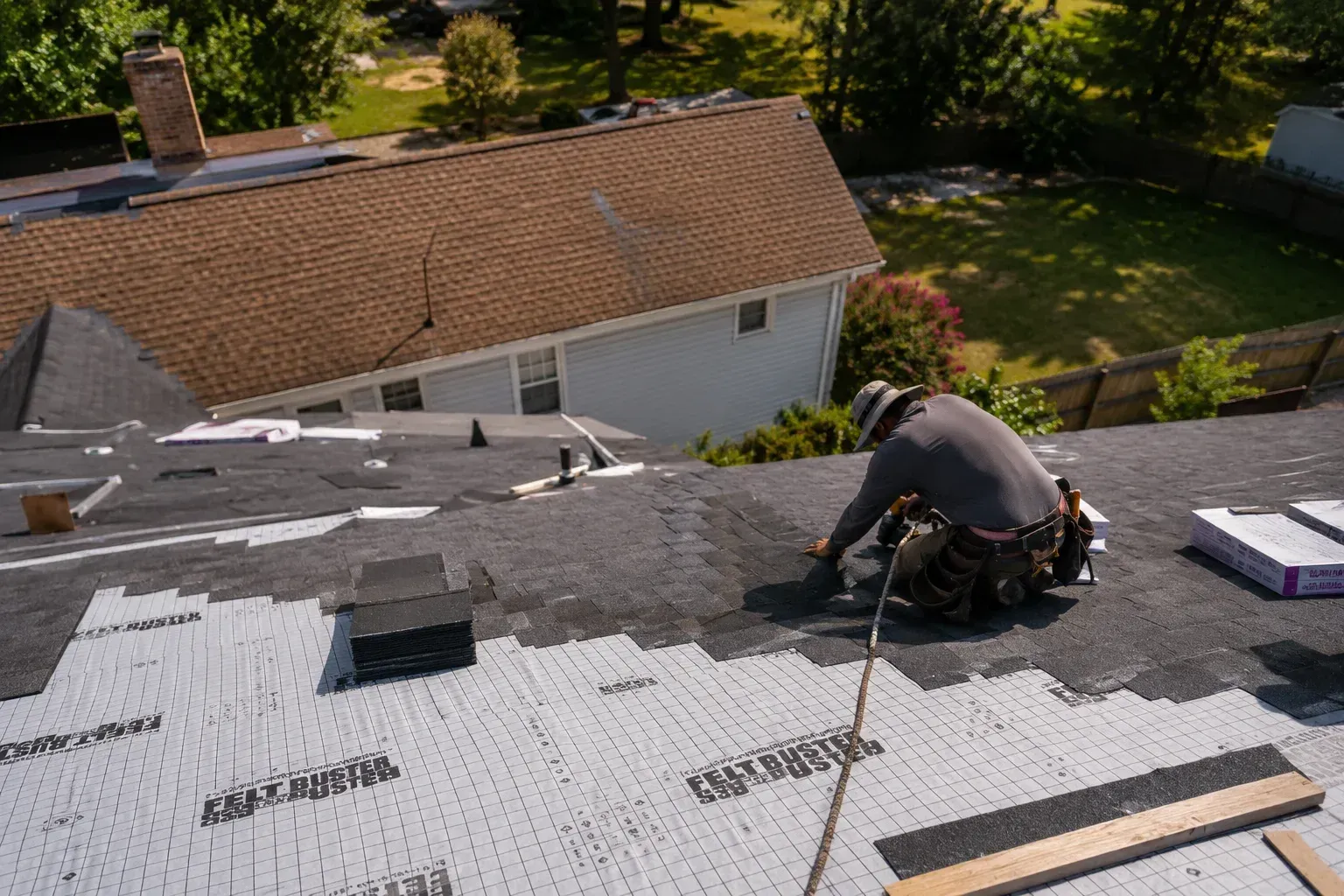
Removing an existing roof and disposing of old materials typically adds $1 to $3 per square foot to the total project cost.
Decking Repair
If the wood decking underneath the existing roof is rotted or damaged, it will likely need to be repaired or replaced before new roofing material is installed. This is often discovered only after the old roof is removed.
Permits
Most Virginia localities require a permit for roof replacement. Permit fees vary by city or county but are generally a modest portion of the overall project cost.
Ventilation and Underlayment
Proper attic ventilation and underlayment (including ice and water shield in some areas) are often necessary for code compliance and roof performance, and these components are typically included in a complete estimate.
Repair vs. Replacement: Understanding the Difference
Not every roofing issue requires a full replacement. Understanding the difference can help homeowners avoid unnecessary expense - or, conversely, recognize when a repair is only a temporary fix.
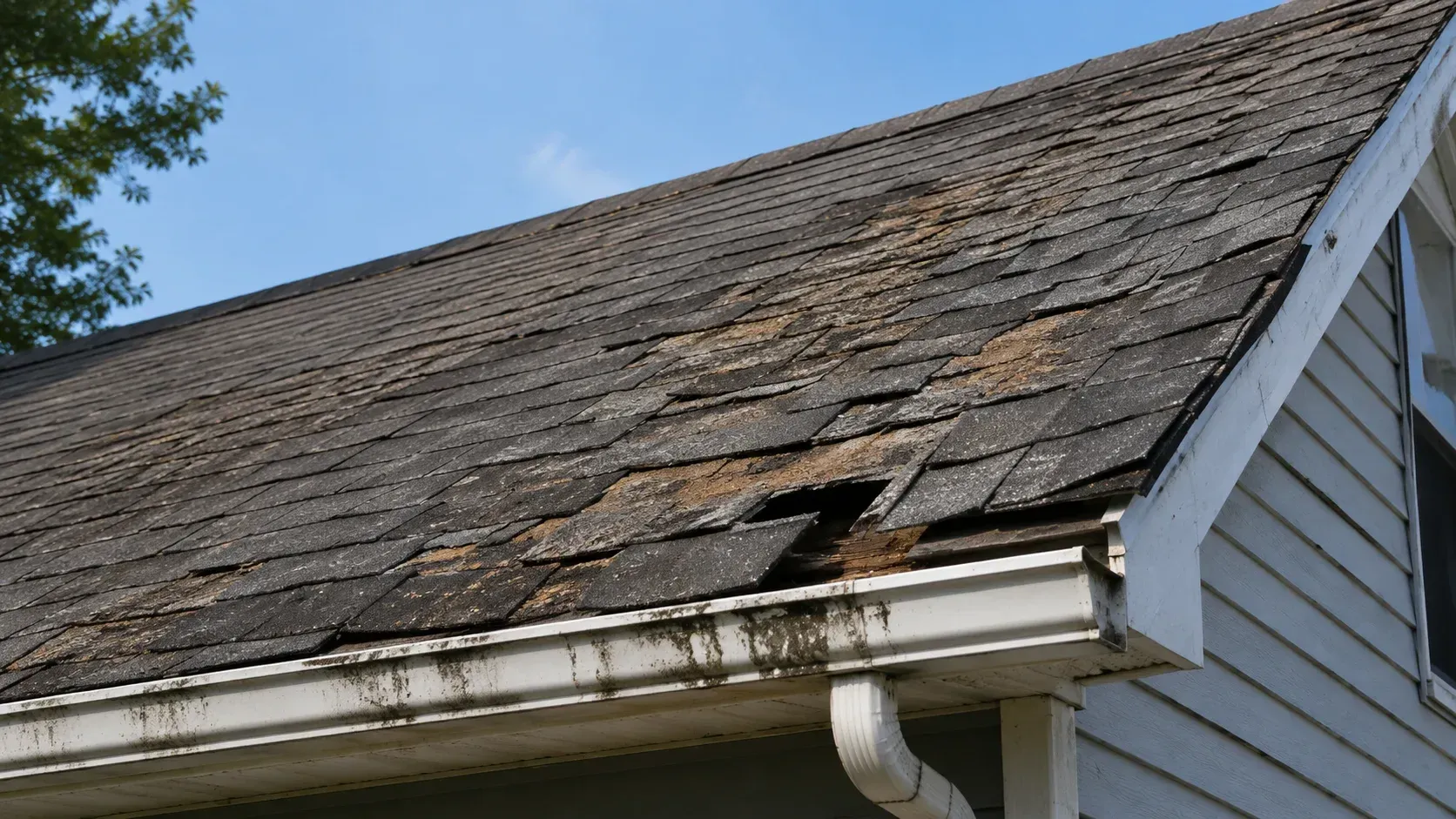
A repair generally addresses a specific, limited issue: a leak, a section of missing shingles, or damaged flashing. Repairs are typically appropriate when the affected area is small and the rest of the roof is in reasonably good condition.
A full replacement is generally considered when damage is widespread, the roofing material has reached the end of its expected lifespan, or repeated repairs are no longer cost-effective. A licensed roofing contractor can assess the specific condition of a roof and explain which option may be appropriate.
How Insurance May Factor Into the Cost
Homeowners insurance may cover roof repair or replacement if the damage resulted from a covered event, such as a storm, hail, or falling debris.
Coverage for general wear and tear is typically excluded from most standard policies.
Each insurance policy is different, and coverage details - including deductibles and depreciation - vary by provider.
Homeowners are encouraged to review their specific policy and speak directly with their insurance provider to understand what is and isn't covered before assuming insurance will offset the cost of a project.
Tips for Getting an Accurate Estimate
Because roof replacement costs vary so much by property, an accurate estimate requires a direct, in-person assessment.
A few practical steps can help homeowners evaluate estimates more effectively:
- Request written estimates from more than one licensed contractor.
- Confirm whether tear-off, disposal, and permits are included in the quoted price.
- Ask what material and warranty terms are specified.
- Compare estimates based on identical scope, not just total price.
These steps don't guarantee a specific outcome, but they can help homeowners make a more informed comparison between options.
Conclusion
Roof replacement costs in Virginia vary considerably based on material, roof size and complexity, labor, and additional factors like tear-off and decking repair. While statewide averages generally fall between $8,000 and $19,000, individual project costs can fall outside this range depending on the specific home.
Understanding these cost drivers - rather than focusing on a single average number - allows homeowners to evaluate estimates more critically and make decisions based on the actual condition and needs of their property.
Summary
This guide is intended to help Virginia homeowners understand the general factors behind roof replacement costs, not to provide a specific price quote. Every roof is different, and the only way to get an accurate, property-specific estimate is through a direct inspection.
For homeowners who want to better understand their roof's condition or talk through their options without pressure, scheduling a no-obligation discovery call with a licensed local roofing contractor can be a useful next step.
This kind of conversation is meant to provide clarity and information - not a sales pitch - so homeowners can make decisions at their own pace.
Frequently Asked Questions
What is the average cost of roof replacement in Virginia?
Most Virginia homeowners can expect costs to fall somewhere between $8,000 and $19,000, though this varies based on roof size, material, and complexity.
What is the cheapest roofing material option?
Asphalt shingles are generally the most affordable roofing material available in Virginia, typically ranging from about $4.50 to $10 per square foot installed.
Does roof replacement cost more in Northern Virginia than other parts of the state?
Generally, yes. Labor costs and overhead tend to be higher in Northern Virginia and the DC metro area compared to more rural regions of the state.
Will homeowners insurance cover the cost of a new roof?
It depends on the cause of damage. Insurance often covers roof replacement when damage results from a covered event, such as a storm, but typically does not cover damage from normal wear and tear. Homeowners should confirm coverage details with their insurance provider.
How long does a typical roof replacement take?
Most residential roof replacements in Virginia take one to two days, though larger or more complex roofs may take longer.
Can a roof be repaired instead of fully replaced?
In some cases, yes. Repairs are often appropriate for limited, localized damage, while full replacement is generally considered when damage is widespread or the roof has reached the end of its expected lifespan. A professional inspection can help determine which option fits a specific situation.
Why do roof replacement estimates vary so much between contractors?
Estimates can vary based on material quality, labor rates, included services (such as tear-off, disposal, and permits), and warranty terms. Comparing estimates with the same scope of work is the most reliable way to evaluate differences.
Recent Posts